Richard Dawkins is in his mid-seventies, as of this writing. He's been an atheist for most of the previous century AND the entirety of this one. Likewise Daniel Dennett, who is nearly as old as Professor Dawkins. Christopher Hitchens (Jefferson rest his soul) would have been about 65 this year. Sam Harris, the youngster in the bunch, is nonetheless greying and middle-aged. The "New" Atheists Aren't. Meet The REAL "New" Atheists: Seth Andrews, AronRa, and Matt Dillahunty...
Rather than being the main problem with Islam, jihadism is just the most prominent symptom of a deeper problem which has been worsening for a long time. Over the last thousand years, Muslim societies stagnated as religion took over and stifled everything else, and they gradually fell behind both economically and technologically. The last remaining part of their identity which they still can see as truly their own is religion.
Fundamentalists use the creation stories in the Bible to construct what they misname as "Creation Science" in opposition to Evolution and the known, long history of the universe. However, there are two creation stories in the Bible--and they differ in significant details. These differences in the two accounts have some important implications for the fundamentalist's belief in the literal truth of the Bible. In fact, these differences prove that belief to be wrong.
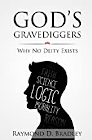
Description Raymond Bradley is probably the most important atheist you’ve never heard of. 16 years before the release of Richard Dawkin’s The Selfish Gene, Professor Bradley was completing his Ph.D. regarding the theological problem of free will, setting off a long, esteemed and distinguished career. As a veteran professor of philosophy back in 1994–long before […]
Jesus is presented by Christians as the greatest moral teacher, as "God made man," yet some of his alleged teachings are so highly objectionable that it would take a warped mind to consider them "good."
The conventional notion about the character of Jesus is that he was an extraordinary person: unique, grand, captivating, a paragon of virtue, and a teacher of concepts that all human beings should use to govern their lives. But is this true? The biographical material shows that Jesus was not a peace-maker, did not offer socially useful ideas other than being charitable, possessed no ethical concepts more advanced than those of his society, and did not have original thoughts. The evidence does not prove that he was charismatic. The prevalent notions that Jesus was the perfect human being, a great teacher, or the perfect moralist are constructs created because of the belief that he was divine.
In Where the Conflict Really Lies, Alvin Plantinga maintains that any apparent conflict between science and classical Christian theism is superficial at best, and that the real conflict lies between science and the "quasi-religion" of naturalism. In fact, because there is evidence of biological and cosmological "fine-tuning," he claims, science may even provide evidence that God exists. In this review Richard M. Smith critiques what Plantinga has to say about three main topics: design arguments that purport to show a deep concord between science and theism, scientific challenges to theism from biological evolution and divine action in the world, and Plantinga's frontal assault on naturalism—that thinking would be impossible and cognition would be unreliable if naturalism were true.
Whatever benefit religion is to emotional stability, religion works (when it works) by coincidence or the placebo effect because god, heaven, and the soul do not exist. Faith is unreasonable in light of scientific truth and historical fact.
Today nobody would believe in the ancient Egyptian religion because it contradicts what we understand about the world around us: gods don't swallow the sun and birds can't bring anything back to life. These blatant misinterpretations of Nature discredit the validity of the pagans' core Super-Natural beliefs--a Supreme Being, a human soul, and heaven and hell. Yet curiously people today do believe in these four superstitions of religion: god, soul, heaven and hell. Apparently their origin has been erased by time. Would modern day Jews, Christians and Muslims discontinue belief in them if they realized their dubious origin: Ice-Age cavemen, wandering hunter-gatherers, and pagans? Or is faith an unreasonable emotion?
In this paper Arnold T. Guminski examines the modal ontological argument based upon possible worlds semantics expounded by Alvin Plantinga and further developed and defended by William Lane Craig. In section A Guminski discloses the flawed underlying assumptions of this Plantinga modal ontological argument (PMOA). In section B he defends the "anti - Plantinga modal ontological argument - argument" (or anti-PMOA-argument) by showing that a maximally great being is not broadly logically possible. In section C Guminski shows that the anti-PMOA-argument is amply confirmed since the procedure used to construct the PMOA plausibly allows the construction of arguments relevantly similar to the PMOA, but inconsistent with it. Section D explains why that which is broadly logically possible/necessary ought to be distinguished from that which is metaphysically possible/necessary. Section E considers the plausibility of premise 1 of the PMOA according to the writings of other scholars.
If the values of the physical constants of our universe were even slightly different, life could not exist. Some have argued that the fact that life does exist thus provides strong evidence that God fine-tuned these values to allow life to emerge. According to the fine-tuning argument, the existence of a life-permitting universe is very improbable on naturalism, but not so on theism. However, we have no way of determining the probability or improbability of actualizing a life-permitting universe on naturalism, for we can only compare our universe against the infinitesimally small subset of other possible universes that have the same physical laws—not the infinite set of all other possible universes.
After the terrorist strikes in Paris on November 13, 2015, it was said that young Arabs in urban ghettos radicalize themselves because they live at the edge of society and have no future. This is little more than an apology. Other ethnic groups live under similar circumstances everywhere and they do not react this way. Only Muslims turn mass murderer and suicide bomber.
This article attempts to show the logical implausibility of an omniscient God and concurrent human free will by first examining the traditional approach, theist rebuttals, and then by introducing the macro approach.
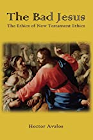
Description Did Jesus ever do anything wrong? Judging by the vast majority of books on New Testament ethics, the answer is a resounding “No.” But since the historical Jesus was a human being, must he not have had flaws, like everyone else? According to Avalos, it shows that New Testament ethics is still primarily an […]
"One of the biggest ironies involving those who virtually worship the Bible is the fact that they often haven't read much of it. If they had, how could they fail to notice that Ezekiel, one of the major prophets, was not only a lousy prognosticator, he was an absolute lunatic as well."
In the last century, many religious, autocratic and punitive traditions have been challenged by atheists, agnostics, freethinkers and human-rights activists who want to create a democratic, secular and humanist world. The irony is that while some communities are becoming more liberal, others are becoming more fundamentalist. In the last few decades, thousands of men and women have been arrested and punished under blasphemy laws all over the world. In some countries, people have taken the law into their own hands and killed those accused of blasphemy.
"Based solely on scientific principles and research, a book could be written counseling us humans about how to treat each other ethically. This book might contain a scientifically based purpose for humanity. Science-based principles of effective parenting could be taught in public schools so that all future parents would learn them."
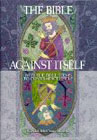
Description All books are written for or against some point of view, and the books of the Bible are no different. Bible book authors were often motivated to write because they wanted to challenge or correct those who had written before them. As Helms explains, The Bible is a war zone, and its authors are […]
Hiram Crespo discusses "The Four Cures" which are at the heart of the doctrine of Epicurus of Samos. He invites you to study Epicurus, and to engage yourself and others in philosophical discourse. He promises that your life will be enriched as a result.
"Being raised as one of Jehovah's Witnesses, 'doing the right thing' was a simple equation, one in which the result was always predictable: either I obeyed and measured up to the standard of right--or I did not. Having the rules simplified and the choices limited allowed a sense of security and a false confidence so that whether or not I measured up I could point to exactly which steps or missteps were responsible.
If any of a number of the universe's physical constants had been even slightly different, then life as we know it could not exist. According to the fine-tuning argument, the extreme improbability of the actual constants having, by chance, their uniquely life-permitting values suggests that they were "fine-tuned" by God to allow life to exist. But there are at least two fatal problems with the fine-tuning argument. First, if the fine-tuning argument's premises hold, then its conclusion does not, since a parallel "divine-pruning" argument yields the opposite conclusion using the exact same line of reasoning. Second, the fine-tuning argument wrongly assumes that the extreme improbability of a unique outcome's occurrence by chance in this lottery-like context implies that that outcome did not occur by chance. Both problems show that the fine-tuning argument does not justify theism or even supernaturalism more generally.
The freedom of our schools to teach well-established science and to instill an appreciation for independent critical thinking is under attack by religious fundamentalists. To the extent they succeed, our children and our society will suffer.
Karen Stollznow's God Bless America: Strange and Unusual Religious Beliefs and Practices in the United States teaches us quite a bit about fundamentalist Mormonism, Amish and Mennonite Protestantism, Pentecostal/Charismatic Christianity, Afro-Caribbean religions, exorcism and Satanism, Scientology, New Age spirituality, and Quakerism. But it also has countless substantive, stylistic, and even grammatical flaws, and it is doubtful that she succeeds in providing her intended "sensitive but factual" and appropriately critical portrayal of the groups that she discusses. But despite these flaws, it is informative enough, interesting enough, and occasionally perceptive enough to be worth reading.
The argument that 20th century atheist regimes are responsible for the worst massacres in history is often put forth, especially by Christian apologists bent on showing what happens when we "turn away from God." But what are the facts?
The key premise of the fine-tuning argument for the existence of God is the alleged improbability of the physical constants taking on values that fall within the narrow life-friendly range. In this paper Aron Lucas examines whether this improbability alone is enough to ground a successful theistic argument from design. He concludes that the fine-tuning proponent is impaled on the horns of a trilemma: he can either reject the argument for having a false premise, reject it for being circular, or accept it at the cost of rejecting the moral argument for the existence of God.
Richard Dawkins is an evolutionary biologist who is perhaps best known for his publicly proclaimed atheism. Some people find him "mean" and "arrogant" in his dismissal of religion and all things "spiritual." But if people could suspend their religious beliefs, they would recognize that there are few individuals as full of awe and reverence for natural existence as is Richard Dawkins--and that we can learn from him.
"I will argue that if everyone in the world adopted a position of respect and tolerance for all people and the environment the world would be a better place. This is more likely to happen with a secular morality than a religious morality because religions often do not preach tolerance and respect for other people or the environment. A religious morality often falls down due to intolerance and a lack of respect for others. Indeed, I go further and argue that a secular morality is better than a religious one because it will produce a more tolerant, respectful world."
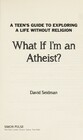
Description Can you have guidance without God? This thoughtful, one-of-a-kind guide offers answers to all of your questions about atheism and nonbelief. Have you ever wondered what religion and belief mean for your life? Maybe you believe in nothing at all. Does that mean you’re an atheist? What does atheism even mean? Regardless of the […]
Creationists often point to the alleged orderliness of the universe as evidence for the existence of a creator deity, "God." But what are the facts? Is the alleged orderliness of the universe actually evidence for--or against--the existence of a creator?
Mary and Joseph are betrothed, and Joseph discovers that Mary is pregnant. This is a dilemma. Did she commit adultery? For Mary, this would clearly not be a good way to go. But of course, being pregnant, she was not in any position to claim she was still a virgin or faithful to Joseph. Or, was she?
We use cookies on our website to give you the most relevant experience by remembering your preferences and repeat visits. By clicking “Accept”, you consent to the use of ALL the cookies.
This website uses cookies to improve your experience while you navigate through the website. Out of these, the cookies that are categorized as necessary are stored on your browser as they are essential for the working of basic functionalities of the website. We also use third-party cookies that help us analyze and understand how you use this website. These cookies will be stored in your browser only with your consent. You also have the option to opt-out of these cookies. But opting out of some of these cookies may affect your browsing experience.
Necessary cookies are absolutely essential for the website to function properly. These cookies ensure basic functionalities and security features of the website, anonymously.
Cookie
Duration
Description
cookielawinfo-checkbox-analytics
11 months
This cookie is set by GDPR Cookie Consent plugin. The cookie is used to store the user consent for the cookies in the category "Analytics".
cookielawinfo-checkbox-functional
11 months
The cookie is set by GDPR cookie consent to record the user consent for the cookies in the category "Functional".
cookielawinfo-checkbox-necessary
11 months
This cookie is set by GDPR Cookie Consent plugin. The cookies is used to store the user consent for the cookies in the category "Necessary".
cookielawinfo-checkbox-others
11 months
This cookie is set by GDPR Cookie Consent plugin. The cookie is used to store the user consent for the cookies in the category "Other.
cookielawinfo-checkbox-performance
11 months
This cookie is set by GDPR Cookie Consent plugin. The cookie is used to store the user consent for the cookies in the category "Performance".
viewed_cookie_policy
11 months
The cookie is set by the GDPR Cookie Consent plugin and is used to store whether or not user has consented to the use of cookies. It does not store any personal data.
Functional cookies help to perform certain functionalities like sharing the content of the website on social media platforms, collect feedbacks, and other third-party features.
Performance cookies are used to understand and analyze the key performance indexes of the website which helps in delivering a better user experience for the visitors.
Analytical cookies are used to understand how visitors interact with the website. These cookies help provide information on metrics the number of visitors, bounce rate, traffic source, etc.
Advertisement cookies are used to provide visitors with relevant ads and marketing campaigns. These cookies track visitors across websites and collect information to provide customized ads.