A Close Look at Dr. Hovind’s List of Young-Earth Arguments and Other Claims (1995) Dave E. Matson Specific Young-Earth Arguments Carbon-14 and Radiometric Dating The Geologic Column Some Additional Topics Examined Miscellaneous Topics Bibliography
A popular response to the problem of evil contends that there is a necessary connection between free will and the existence of moral (or human-caused) evil. Alvin Plantinga, for instance, has advanced a concept of "transworld depravity"--essentially the idea that in any possible world where a given person has substantial free will, that person will necessarily commit at least one immoral act. In criticizing Plantinga's notion of transworld depravity, Clement Dore offers an alternative solution. But Weisberger argues that Dore's solution also fails because the existence of free will in no way necessitates either the human capacity to act wrongly or the excessive amount of moral evil we actually find in the world. Weisberger concludes that the free will defense utterly fails to undermine the argument from evil.
This is a compendium of quotations supporting the separation of state and church compiled by Ed and Michael Buckner. All of these quotes have been throughly researched. None are "out of context" or otherwise misleading. For example, the bogus John Adams' quote, "...this would be the best of all possible worlds if there were no religion in it ..." is not included. This compendium is an excellent reference for debating zealots who claim that this is a "Christian Nation", all of Founding Fathers were twice borns, and other nonsense.
Is the Bible the work of God? Is it a valid guidebook? How can we know? This introduction serves as a very basic preface to the makeup of the Bible and to how the Bible came about, as well as to some basic kinds of possible biblical problems—especially the kinds of problems inherent in a fundamentalist/literalist approach to the Bible that views the Bible as the inerrant, infallible, inspired, and plenary "Word" of a perfect, omnipotent, and loving God.
The author uses a two-letter system of abbreviations for the various books which make up the Bible. Although not unique, it is somewhat unusual. This is the key to those abbreviations.
In the author's opinion, these particular verses are so inconsistent with each other and/or with reality as to be fatal to the claim that the Bible was inspired by a perfect and omnipotent "God."
In the author's opinion, these verses represent atrocities which would not be characteristic of inspiration by a perfect, omnipotent, just, and loving "God."
In the author's opinion, these verses represent inconsistencies which would not be characteristic of inspiration by a perfect "God." Note: The author makes a subtle distinction between the terms "inconsistency" and "contradiction"; please see his explanation in the disclaimer at the top of this article, and keep in mind that at least some of the listed inconsistencies could certainly be considered biblical contradictions.
In the author's opinion, these verses represent precepts and/or guidelines which would not be characteristic of inspiration by a perfect "God," precepts and/or guidelines which are even sometimes downright ridiculous.
In the author's opinion, these verses could be taken as being sufficiently vulgar as to be unworthy of having been inspired by a perfect "God," verses which--were they not in the Bible--would likely be considered even by many Jews and Christians to be "vulgar."
The "book is a logically deft and clearly written introduction to the philosophy of religion. It should be useful for undergraduate courses, though parts, such as the discussion of the modal ontological argument, are quite complex and certain to confuse beginners. The book is also a brief for atheism. In general, it serves both of its functions well. However, the three parts of the book are unequal in value. I found part 3, in which Le Poidevin examines the possibility of religion without God, to be of less interest than the earlier sections. Further, though I regard part 1, 'The Limits of Theistic Explanation,' as a nearly complete success, I have some reservations about the treatment of the problem of evil in part 2."
"[T]he National Religious Broadcasters and the Oklahoma Christian Crusade began a rumor that Madalyn O'Hair had filed the petition with the FCC and that it had contained 27,000 signatures. THIS WAS A BALD FACED LIE."
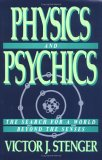
Editorial Reviews From Book News, Inc. , June 1, 1990 Stenger (physics, U. of Hawaii) critically examines theories of a transcendentreality in terms of what is currently known about matter at its most fundamentallevel. He offers a convincing rebuttal to those who attempt to link physicsto mystical truths.Annotation copyright Book News, Inc. Portland, Or
We use cookies on our website to give you the most relevant experience by remembering your preferences and repeat visits. By clicking “Accept”, you consent to the use of ALL the cookies.
This website uses cookies to improve your experience while you navigate through the website. Out of these, the cookies that are categorized as necessary are stored on your browser as they are essential for the working of basic functionalities of the website. We also use third-party cookies that help us analyze and understand how you use this website. These cookies will be stored in your browser only with your consent. You also have the option to opt-out of these cookies. But opting out of some of these cookies may affect your browsing experience.
Necessary cookies are absolutely essential for the website to function properly. These cookies ensure basic functionalities and security features of the website, anonymously.
Cookie
Duration
Description
cookielawinfo-checkbox-analytics
11 months
This cookie is set by GDPR Cookie Consent plugin. The cookie is used to store the user consent for the cookies in the category "Analytics".
cookielawinfo-checkbox-functional
11 months
The cookie is set by GDPR cookie consent to record the user consent for the cookies in the category "Functional".
cookielawinfo-checkbox-necessary
11 months
This cookie is set by GDPR Cookie Consent plugin. The cookies is used to store the user consent for the cookies in the category "Necessary".
cookielawinfo-checkbox-others
11 months
This cookie is set by GDPR Cookie Consent plugin. The cookie is used to store the user consent for the cookies in the category "Other.
cookielawinfo-checkbox-performance
11 months
This cookie is set by GDPR Cookie Consent plugin. The cookie is used to store the user consent for the cookies in the category "Performance".
viewed_cookie_policy
11 months
The cookie is set by the GDPR Cookie Consent plugin and is used to store whether or not user has consented to the use of cookies. It does not store any personal data.
Functional cookies help to perform certain functionalities like sharing the content of the website on social media platforms, collect feedbacks, and other third-party features.
Performance cookies are used to understand and analyze the key performance indexes of the website which helps in delivering a better user experience for the visitors.
Analytical cookies are used to understand how visitors interact with the website. These cookies help provide information on metrics the number of visitors, bounce rate, traffic source, etc.
Advertisement cookies are used to provide visitors with relevant ads and marketing campaigns. These cookies track visitors across websites and collect information to provide customized ads.

 Help keep IIDB and the Secular Web online. A small donation will help us continue to do great things for the cause of secularism. Things like Freethinker Podcast, Secular Web Kids, the Secular Frontier, the Secular Web Library, the Secular Web Kiosk and the new print publications.